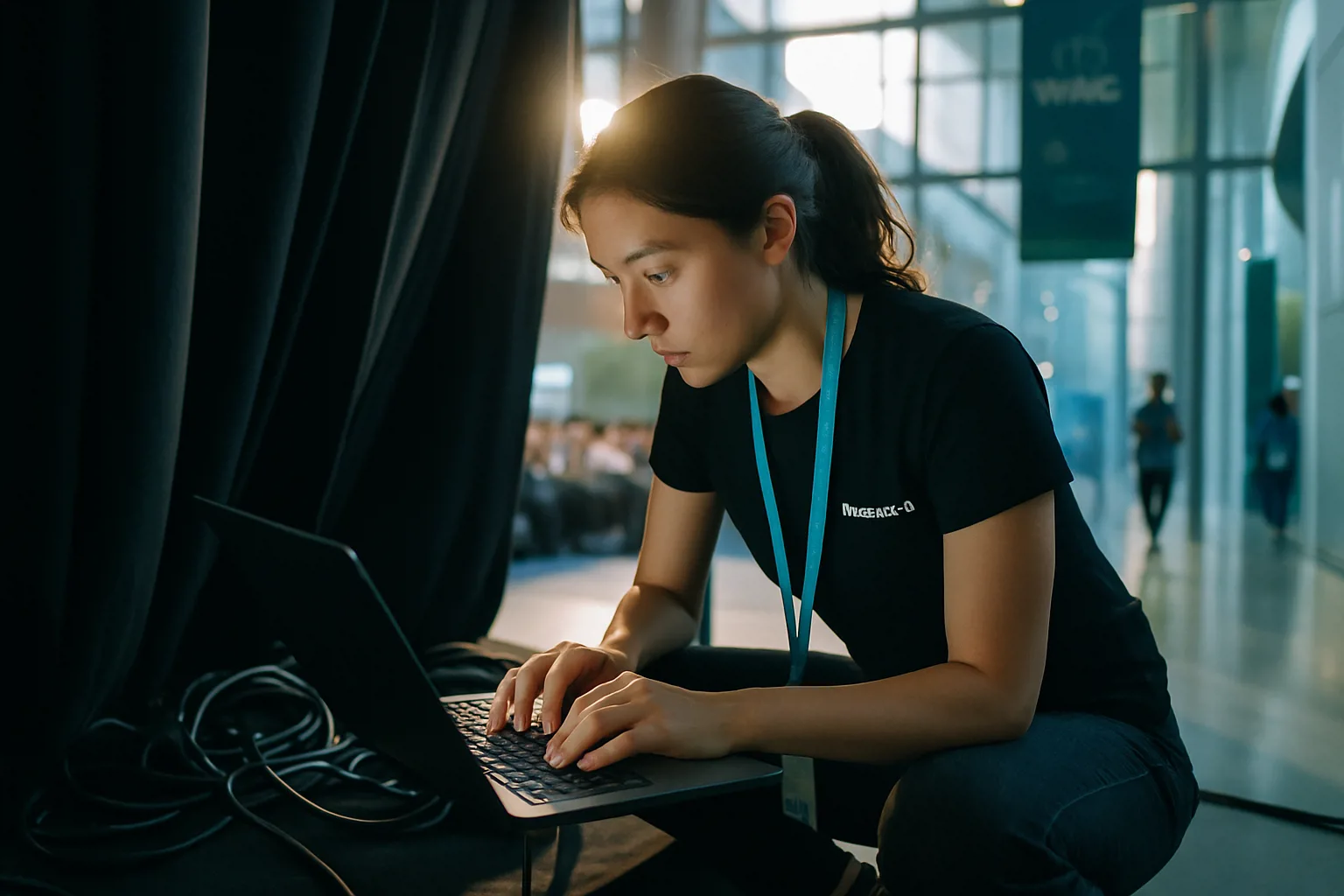
At the 2026 World Artificial Intelligence Conference, Xi Jinping positioned China as a leader in AI, challenging U.S. dominance with strategic initiatives and technological advancements.
- China aims to lead a new global AI order, countering U.S. dominance.
- The establishment of WAICO marks a significant step in AI governance.
- China's AI advancements surpass some leading U.S. models.
- U.S. export policies reflect a nuanced approach to Chinese AI growth.
- China's AI industry is rapidly expanding and influencing global research.
In a bold move at the 2026 World Artificial Intelligence Conference (WAIC) in Shanghai, Chinese President Xi Jinping articulated his vision for China to spearhead a new global AI order. This initiative aims to position China as a counterbalance to the longstanding U.S. dominance in the field. Xi's announcement underscores China's commitment to advancing its technological prowess and fostering international cooperation.
China's Strategic Move: Establishing WAICO
At the heart of China's AI strategy is the creation of the World Artificial Intelligence Cooperation Organization (WAICO). This body, comprising 29 countries, seeks to promote equitable AI governance and collaboration. WAICO aims to work closely with developing regions, including ASEAN, the African Union, and BRICS nations, to ensure inclusive growth and shared technological advancements.
- Promotes equitable AI governance
- Fosters collaboration with developing regions
- Aims to balance global AI power dynamics
Technological Advancements: The Kimi K3 Model
China's technological advancements were showcased with the unveiling of the Kimi K3 model by Moonshot AI. This model, with its 2.8 trillion parameters, surpasses leading American models such as Anthropic's Fable 5 and OpenAI's GPT-5.6 Sol in front-end coding benchmarks. This development highlights China's capability and ambition to set new standards in AI technology.
Nuanced U.S. Export Policies
The U.S. government's decision to allow Chinese firms, including ZTE, to purchase Nvidia's H200 AI chips reflects a complex approach to tech export restrictions. While broader restrictions remain, this move indicates a willingness to engage in selective technological exchanges, acknowledging China's growing influence in AI development.
"This nuanced approach to tech exports underscores the U.S.'s recognition of China's potential in AI."
China's AI Industry Growth
By 2025, China's core AI industries were valued at over 1.2 trillion yuan, with a burgeoning ecosystem of over 6,200 AI enterprises. This growth is complemented by China's increasing share of global AI research publications, rising from under 5% in 2000 to nearly 36% by 2025. Such figures manifest China's robust expansion and influence within the global AI landscape.
Implications for Global AI Leadership
China's strategic initiatives aim to secure a reliable supply of key AI technologies by 2027, integrating AI into the manufacturing sector. This comprehensive approach not only enhances China's domestic capabilities but also positions it as a pivotal player in global AI leadership.
The Business Perspective: Opportunities and Implications
For businesses worldwide, China's ascension in the AI domain presents both opportunities and challenges. Companies can benefit from collaborating with Chinese AI enterprises or adapting to new technologies emerging from China. As China continues to expand its influence, businesses must stay informed and agile to leverage these developments effectively.
Interested in exploring collaborations or updates on AI advancements? Stay tuned to our expert insights and analyses for strategic guidance.
Frequently Asked Questions
What is WAICO?
The World Artificial Intelligence Cooperation Organization (WAICO) is an international body established by China to promote equitable AI governance and collaboration among 29 countries.
How does China's Kimi K3 model compare to U.S. models?
The Kimi K3 model, with 2.8 trillion parameters, surpasses leading U.S. models like Anthropic's Fable 5 in front-end coding benchmarks.
Sources
- Xi calls for equitable global AI governance, unveils new cooperation body | english.scio.gov.cn
- China just erased America's AI lead
- US gov't allows Chinese telecom giant ZTE to purchase Nvidia H200 AI chips - firm joins Alibaba, Tencent, and ByteDance in access to Hopper tech
- Trajectories and Comparative Analysis of Global Countries Dominating AI Publications, 2000-2025
- China aims for secure, reliable supply of AI core tech by 2027